- Beginner
- 15 min
How to Count Crochet Stitches and Rows
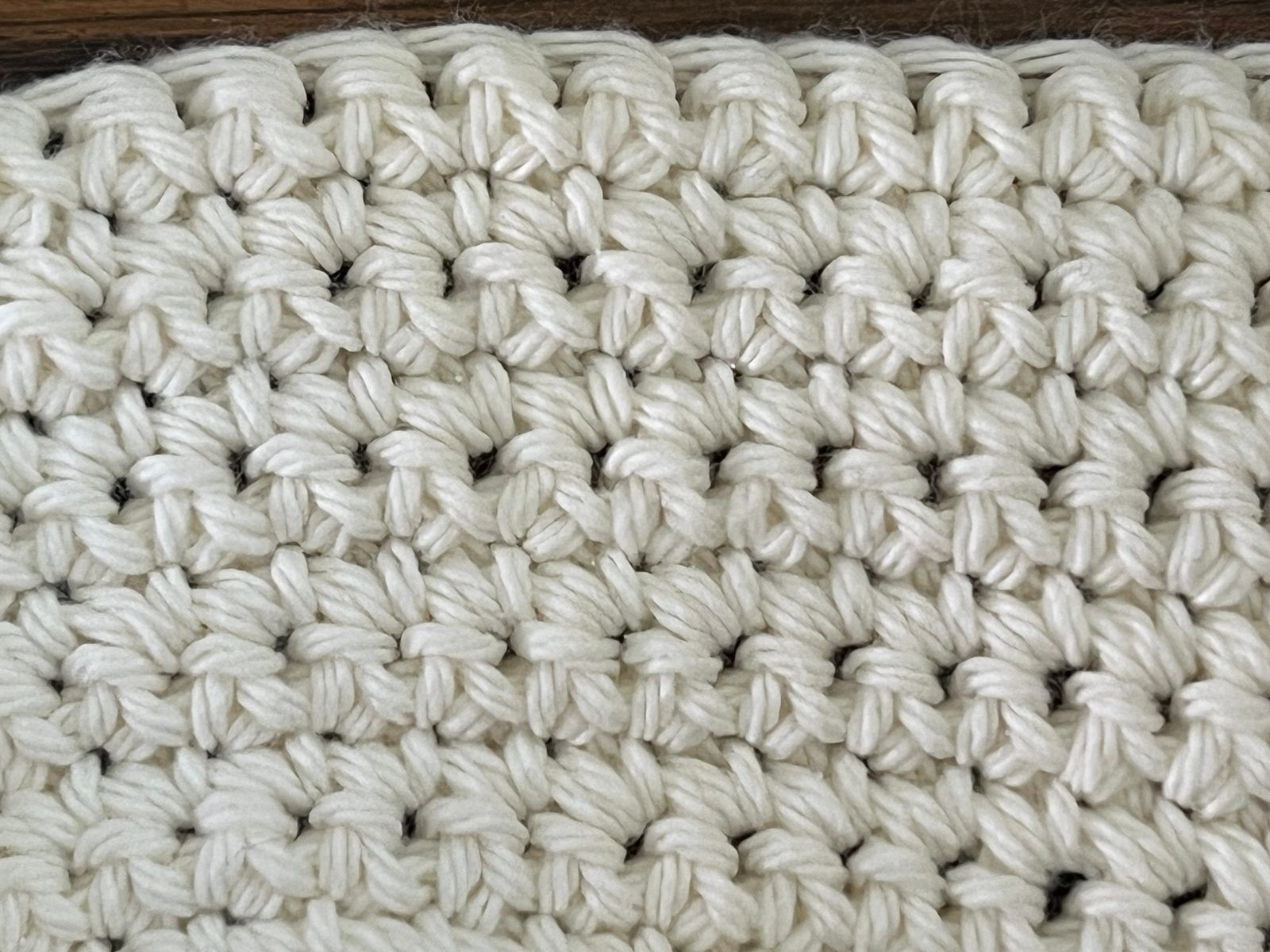

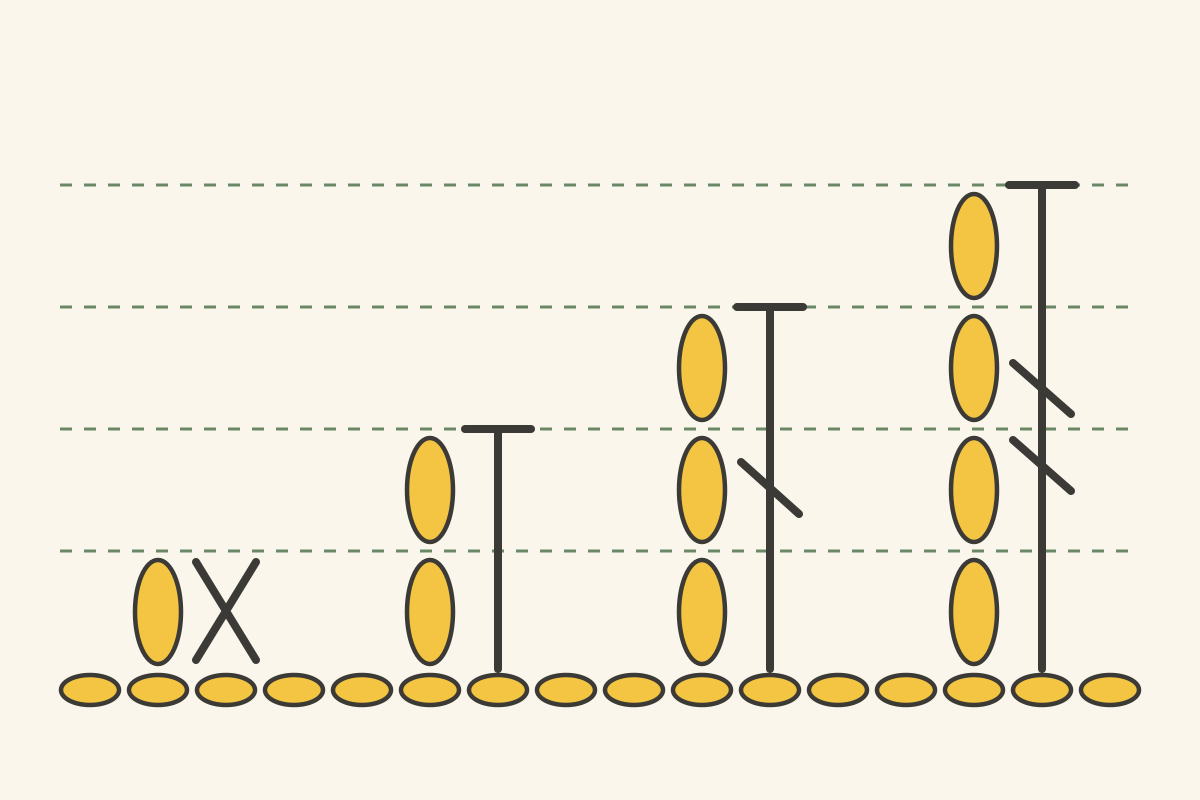
Chart key
- chain (ch)
- single crochet (sc) — UK: double crochet (dc)
- half double crochet (hdc) — UK: half treble crochet (htr)
- double crochet (dc) — UK: treble crochet (tr)
- treble crochet (tr) — UK: double treble crochet (dtr)
Counting is the quiet skill behind every neat piece of crochet. Most wonky edges, growing scarves and shrinking blankets come down to one stitch gained or lost at the end of a row. Once you know what a stitch looks like from the top and the side, counting takes seconds.
US/UK note: this page uses US terms. US single crochet (sc) is UK double crochet; US double crochet (dc) is UK treble.
Counting chains
Look at the front of the chain. Each chain is a small V.
- Start at the first chain after the slip knot.
- Count each V up to the hook.
- Don’t count the slip knot or the loop on the hook.
For long chains, put a stitch marker every 10 or 20 chains. If you lose count, you only have to recount from the last marker.
Counting stitches in a row
Every crochet stitch has a V on top made of its two top loops (front loop and back loop).
- Lay the work flat with the last row facing you.
- Look along the top edge and find the sideways Vs.
- Count each V from one end to the other.
- Include the last stitch — it often hides tucked beside the turning chain.
Single crochet
Single crochet stitches are short and close together, so the Vs sit tightly packed. Count them slowly; spreading the top edge slightly with your fingers helps.
Double crochet and taller stitches
You can count the Vs on top or count the posts — the vertical columns of each stitch. With dc, the posts are easy to see and count.
The turning chain question
Whether the turning chain counts as a stitch varies by pattern. Check the pattern notes.
| Stitch | Usual turning chain | Counts as a stitch? |
|---|---|---|
| Single crochet (sc) | ch 1 | Almost never |
| Half double crochet (hdc) | ch 2 | Varies by pattern |
| Double crochet (dc) | ch 3 | Often yes in traditional patterns; many modern patterns say no |
| Treble crochet (tr) | ch 4 | Often yes |
- If it counts: include the turning chain in your count, skip the first stitch at the start of the row, and work the last stitch into the top of the previous row’s turning chain.
- If it doesn’t count: leave it out of your count, work the first stitch into the first stitch of the row, and don’t work into the turning chain at the end.
Counting rows
Single crochet rows
Rows of single crochet worked back and forth form horizontal ridges. Because the front and back of each row alternate, one ridge on a given side usually equals two rows — count the ridges on one side and multiply by 2. A more reliable method is to count the stitches stacked in a single column: look at one column and count each stitch from the foundation up.
Double crochet rows
Count the posts stacked in one column. Each post is one row. Because dc are tall, this is quick.
In the round
Count from the center out, following one line of stitches. A stitch marker in the first stitch of every round makes this easy, especially in spirals, where there’s no visible join.
Tip: Clip a locking stitch marker into the first stitch of each row, and move it up as you go. Then the first and last stitches are never in doubt.
Why your count might be off
| Symptom | Likely cause |
|---|---|
| Piece gets wider | Working into the turning chain when it doesn’t count, or working 2 sts in one by accident |
| Piece gets narrower | Skipping the first stitch when the turning chain doesn’t count, or missing the last stitch |
| Count right but edges ragged | Turning chain too tight or too loose for the stitch height |
| Count jumps by one each round | Joining into the wrong stitch, or counting the joining sl st as a stitch |
Common mistakes
- Counting the loop on the hook. It’s not a finished stitch.
- Counting the slip knot. It’s not a chain.
- Losing the last stitch under the turning chain.
- Mixing turning-chain methods within one piece.
- Counting only at the end. Count every row while you’re learning; it’s much easier to fix one row than ten.
FAQ
Do you count the turning chain as a stitch?
Only if the pattern says so. In single crochet it almost never counts; for taller stitches it varies.
How do I count stitches in a magic ring or round?
Count the Vs around the top of the round, starting from your stitch marker. Don’t count the joining slip stitch unless the pattern tells you to.
What’s the easiest way to keep track of rows?
Use a row counter or tally marks on paper, and keep a marker in the first stitch of each row or round.
Why does my crochet have more stitches than the pattern?
Usually an extra stitch is being worked into the turning chain or the same stitch twice at an edge. Check the first and last stitches of each row.
This page uses US crochet terms.