- Beginner
- 10 min
- US sl st = UK ss
How to Slip Stitch in Crochet (sl st)
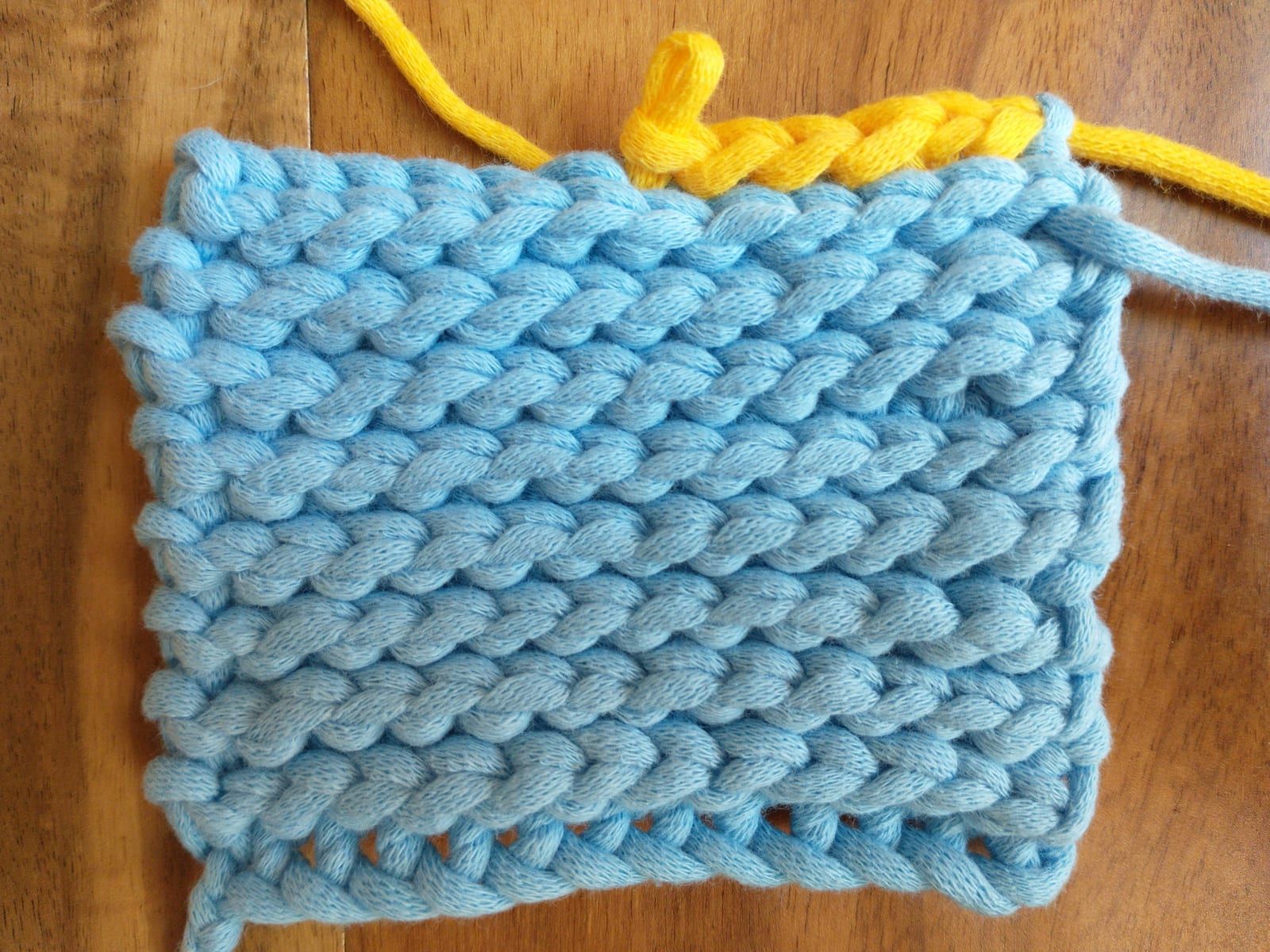

The slip stitch is the shortest crochet stitch — so short it barely adds any height. You’ll rarely work whole rows of it, but you’ll use it constantly: to join the end of a round to its beginning, to travel across stitches without breaking the yarn, and to make a firm, tidy edge.
US patterns abbreviate it sl st; UK patterns usually write ss. The stitch itself is identical.
Don’t confuse it with a slip knot, which is the loop you make to get yarn onto the hook in the first place.
You’ll need
- Worsted-weight yarn and a matching hook (for example, a 5 mm / H-8)
- A swatch to practice on — a few rows of single crochet, or a chain
Step-by-step: how to slip stitch
- Insert your hook into the stitch the pattern names (under both top loops unless told otherwise).
- Yarn over: wrap the working yarn over the hook from back to front.
- Pull through everything: draw the yarn through the stitch and through the loop on your hook, all in one motion. One loop remains on the hook.
That’s one slip stitch. Compare it with a single crochet: in single crochet you pull up a loop (two loops on hook), then yarn over again and pull through both. In a slip stitch you skip that middle stage and go straight through.
Tip: Keep slip stitches loose. Because the yarn goes through two loops at once, they tighten up fast. If you’ll need to work into them later, use a hook a size larger.
Joining a round with a slip stitch
When you crochet in joined rounds — granny squares, flat circles, hats worked in rounds — each round ends with a slip stitch into the first stitch (or the top of the beginning chain):
- Finish the last stitch of the round.
- Find the first stitch of the round. If the round began with a chain that counts as a stitch, the join goes into the top chain of that turning chain; if the chain doesn’t count, the join goes into the first real stitch.
- Insert the hook, yarn over, and pull through the stitch and the loop on your hook.
Your pattern should tell you exactly where to join. If it doesn’t, check your stitch count: joining in the wrong place adds or loses a stitch each round.
Slip stitching across to move your yarn
Sometimes you need to start the next round from a different spot — for example, from a corner chain space in a granny square. Instead of cutting the yarn, you slip stitch across the stitches until you reach the spot. Because the slip stitch is so short, the path is nearly invisible.
Slip stitch as an edging
Slip stitches worked evenly around the edge of a finished piece make a neat, chain-like outline and can help keep edges from stretching. Keep them relaxed so the edge doesn’t pull in.
Turning chain and height
A slip stitch has essentially no height, so when you work rows of slip stitch you usually don’t chain to turn at all, or chain just 1 and skip it. Rows of slip stitch worked in the back loop only form a dense, stretchy ribbed fabric — a popular technique for hat brims and cuffs.
| Stitch | Height | Usual turning chain |
|---|---|---|
| Slip stitch (sl st) | Almost none | 0 (sometimes 1) |
| Single crochet (sc; UK dc) | 1 chain | 1 |
| Half double crochet (hdc; UK htr) | 2 chains | 2 |
| Double crochet (dc; UK tr) | 3 chains | 3 |
US/UK note: this page uses US terms. US single crochet is UK double crochet; US double crochet is UK treble.
Common mistakes
- Pulling slip stitches too tight. They become hard to work into and pucker the fabric.
- Joining into the wrong stitch. Joining into the second stitch instead of the first (or vice versa) changes your count by one every round, and the seam starts to lean.
- Counting the join as a stitch. A joining slip stitch normally does not count as a stitch in the round.
- Mixing up slip knot and slip stitch. One starts your work; the other is a stitch you make into your work.
FAQ
Does a slip stitch count as a stitch?
Usually not when it’s used to join a round or move across stitches. In fabric made entirely of slip stitches, each one does count. Follow your pattern’s stitch counts.
Is a slip stitch the same in US and UK terms?
Yes, it’s the same stitch. US patterns abbreviate it sl st and UK patterns usually use ss.
Why is my joining seam slanting?
Rounds that are joined and then started again tend to drift a little each round. Turning your work at the end of every round, or using a joining method your pattern recommends, can reduce the lean.
Can I slip stitch through the back loop only?
Yes. Back-loop slip stitch is how slip-stitch ribbing is made. Work it loosely so the fabric stays stretchy.
This page uses US crochet terms.