- Easy
- 20 min
How to Crochet a Magic Ring (Magic Circle)
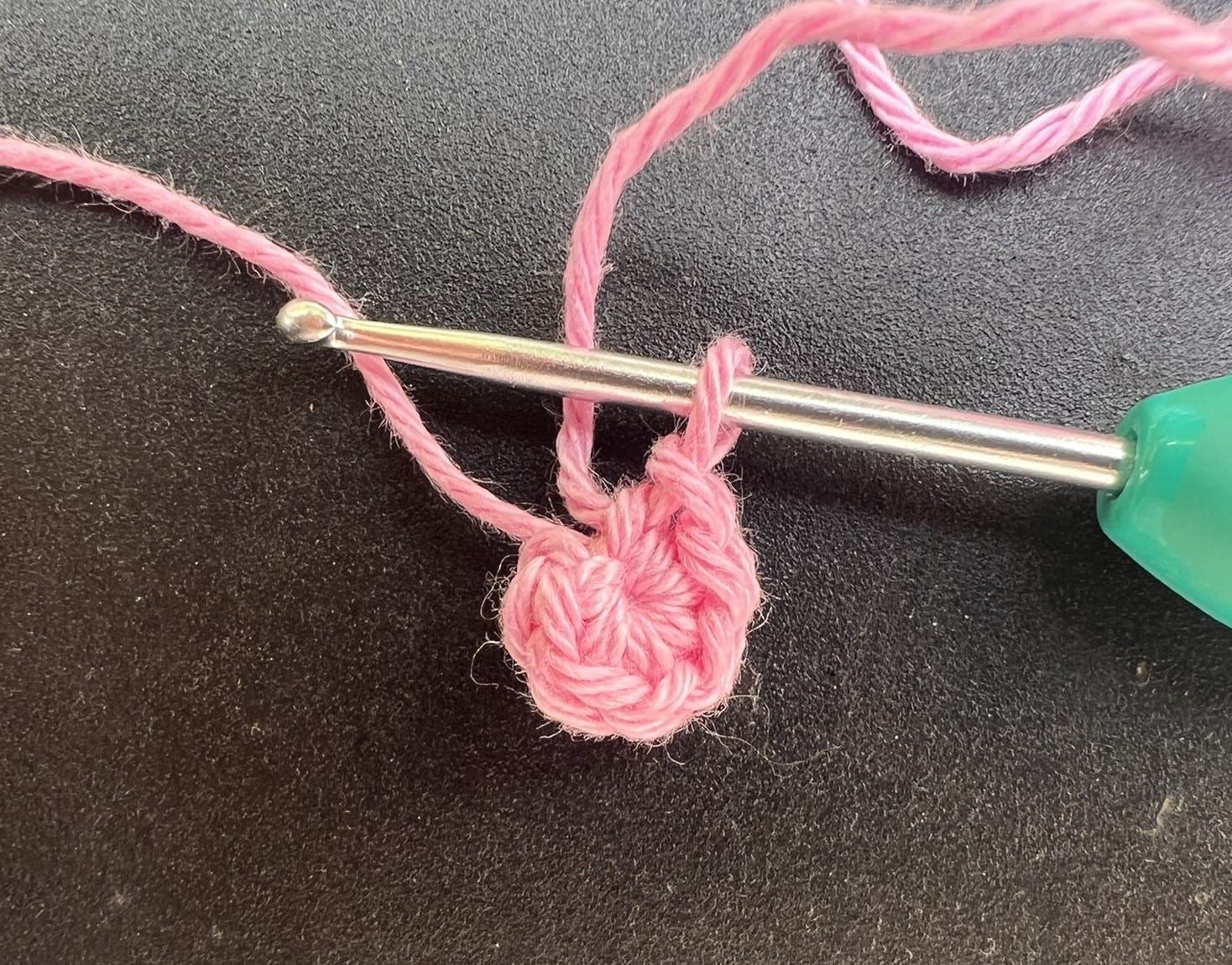

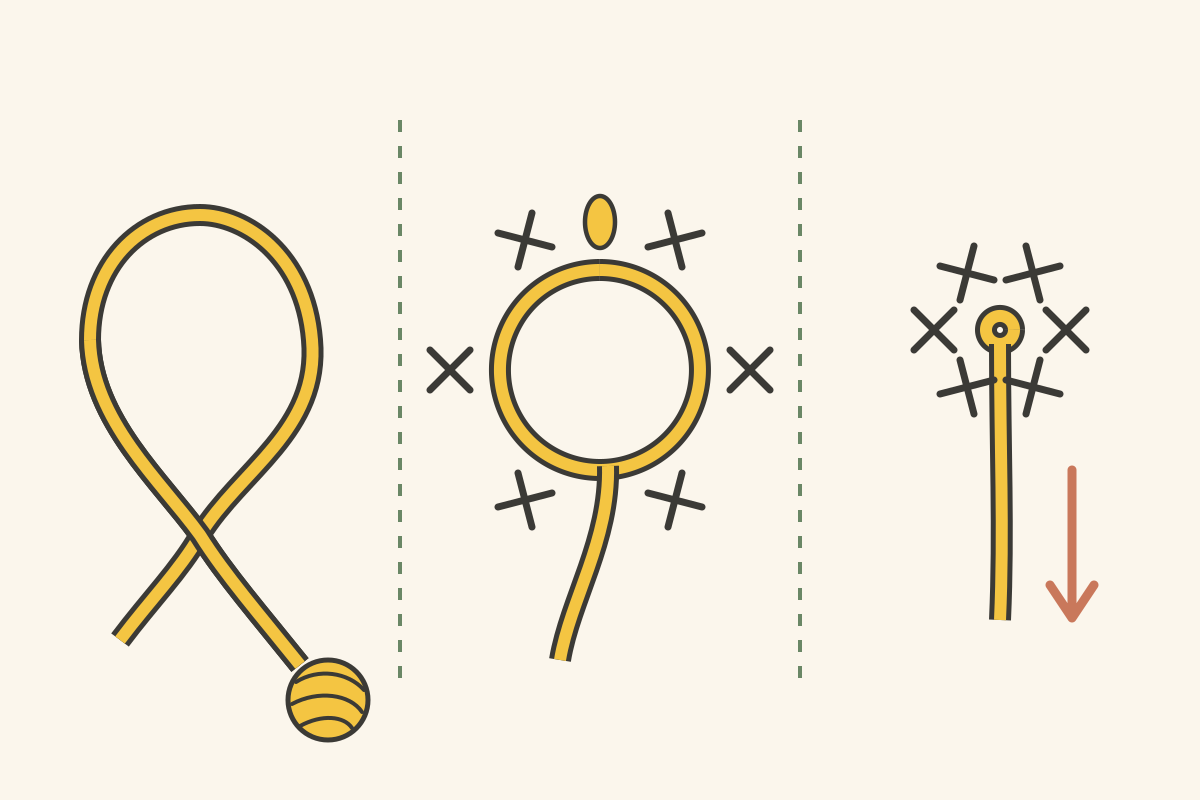
Chart key
- chain (ch)
- single crochet (sc) — UK: double crochet (dc)
A magic ring (also called a magic circle or adjustable ring) is the cleanest way to start anything worked in the round: amigurumi, hats, coasters, flowers. Instead of joining a few chains into a ring that always leaves a small hole, you work the first round over a loose loop of yarn and then pull the tail to close it completely. It feels awkward the first few times, and then it becomes second nature.
US/UK note: This page uses US terms. US single crochet (sc) is called double crochet (dc) in the UK.
You’ll need
- Smooth, light-colored worsted yarn (dark or fuzzy yarn hides the loop)
- A hook that suits the yarn, for example 4.5–5 mm (US 7–H-8)
- Scissors and a stitch marker
Step-by-step: the magic ring
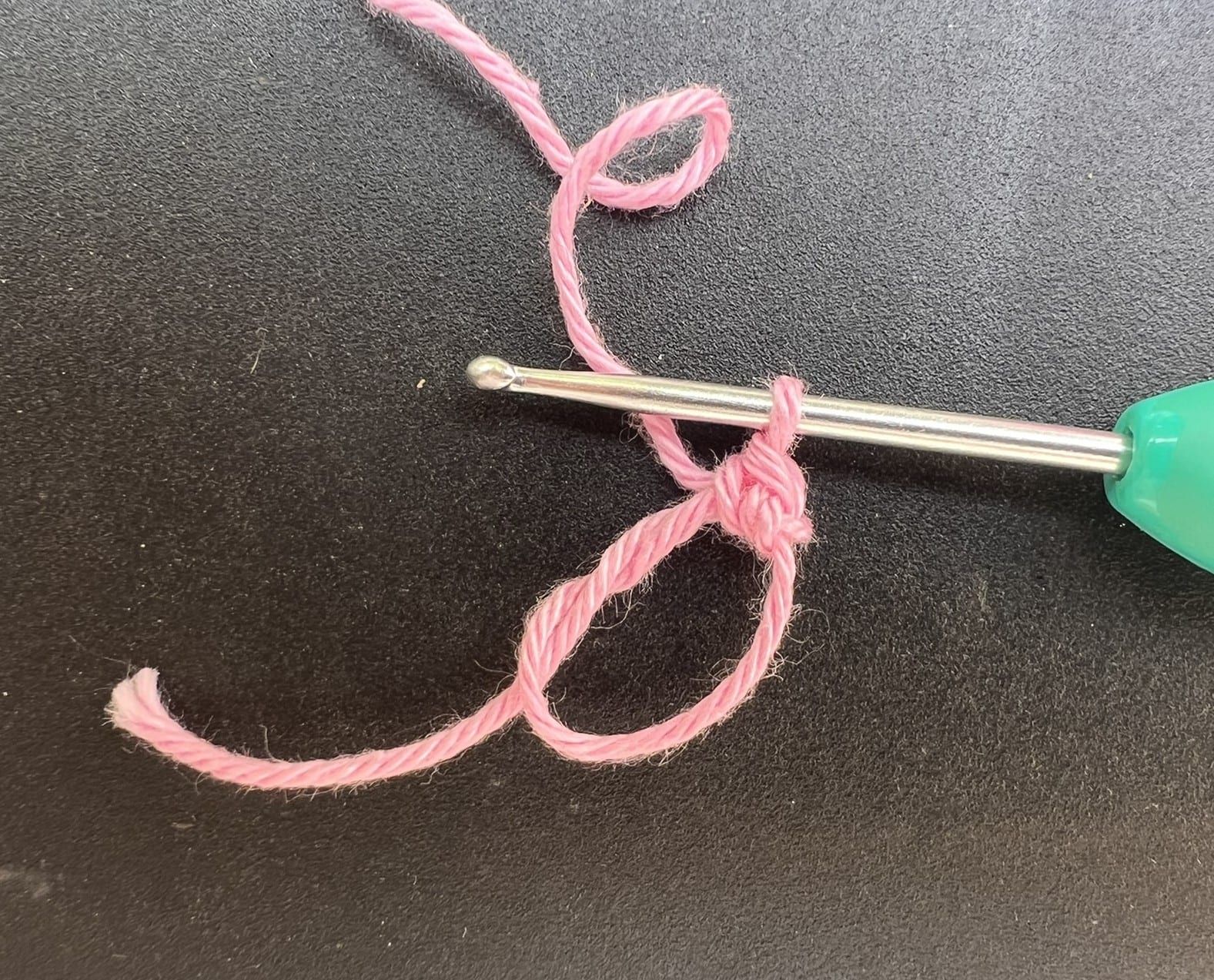
- Make a loop. Lay the yarn tail over your fingers and wrap the working yarn around to form a circle, with the working yarn crossing over the tail. Leave a tail of about 6 in (15 cm).
- Hold the crossing point. Pinch where the strands cross between your thumb and middle finger. The working yarn goes over your index finger as usual.
- Insert the hook into the center of the circle from front to back.
- Yarn over and pull up a loop through the center. You now have one loop on the hook; the circle is still open.
- Chain 1. This secures the ring. It does not count as a stitch.
- Work the first stitch. Insert the hook into the center again, so you are working over both the ring and the tail. Yarn over, pull up a loop, yarn over, pull through both loops: one single crochet (sc; UK double crochet) made.
- Repeat until you have the number of stitches the pattern asks for, most often 6 sc.
- Pull the tail. Hold the stitches and pull the tail firmly. The ring shrinks and the center closes. If the tail does not move, see the troubleshooting below.
- Mark the first stitch with a stitch marker so you can find the start of the round.
Tip: Before you pull the tail, count your stitches. Once the ring is closed it is much harder to see whether you made 5, 6 or 7.
Joining or spiraling
After the ring is closed you have two ways to continue:
- Spiral (common in amigurumi): Work the next round straight into the first stitch, moving your marker up each round. No seam, but a small jog where colors change.
- Joined rounds (common for flat pieces): Slip stitch into the first stitch, chain 1, and start the next round in the same stitch. Neater edges for coasters and mandalas, but a faint seam line.
Follow whatever the pattern says; when you design your own, both work.
Double-loop magic ring (extra secure)
If your rings tend to loosen over time, wrap the yarn around your fingers twice before starting. Work the first round over both loops. Then:
- Pull the tail gently to see which of the two loops moves.
- Pull that loop to shrink the other loop completely.
- Pull the tail to close the remaining loop.
Because two strands hold the center, it is less likely to work loose, which can be worth it for toys that will be squeezed.
Securing the tail
After a few rounds, weave the tail in a different direction through the backs of the stitches, then back again. This locks the center closed. Do not cut the tail flush right after round 1; you need it to tighten again if the center relaxes.
Common mistakes
- Working over the ring only, not the tail. The ring will not close, or it closes only partway. Each stitch must enclose both strands.
- Counting the chain-1 as a stitch. The starting chain only anchors the ring. Your first real stitch goes into the ring after it.
- Letting go of the crossing point too early. The loop untwists and slips before the first stitches hold it. Keep the crossing pinched until you’ve worked two or three stitches.
- Too short a tail. Leave enough to grip and weave in securely, at least 4–6 in (10–15 cm).
- Pulling the working yarn instead of the tail. Only the tail closes the ring. Pulling the working yarn just tightens your last stitch.
Magic ring alternative
If the magic ring isn’t clicking yet, chain 2 and work the first round into the second chain from the hook. It leaves a small hole in the center, unlike a true magic ring, which closes completely. For lacy motifs such as granny squares, a ring of 4 chains joined with a slip stitch is also traditional.
FAQ
What is the difference between a magic ring and a magic circle?
Nothing. Magic ring, magic circle and adjustable ring all describe the same technique. You may also see “magic loop”, but in knitting that name means a different technique, so magic ring is the clearer term.
Why won’t my magic ring close?
Most often a stitch was worked over the ring but not the tail, or the tail got wrapped around a stitch. Gently pull the ring apart, find the stitch that traps the tail, and redo it.
How many stitches go in a magic ring?
Whatever the pattern says. Six single crochet is the standard start for flat circles and spheres because it makes increase math simple: each round adds 6 stitches. Half double crochet patterns often use 8, and double crochet patterns 10 to 12.
Can I use a magic ring with double crochet?
Yes. Chain 2 or 3 after securing the ring (check whether the pattern counts it as a stitch), then work the double crochets over the ring and tail as usual.
Step photos

This page uses US crochet terms.