- Beginner
- 15 min
How to Hold a Crochet Hook (and Your Yarn)
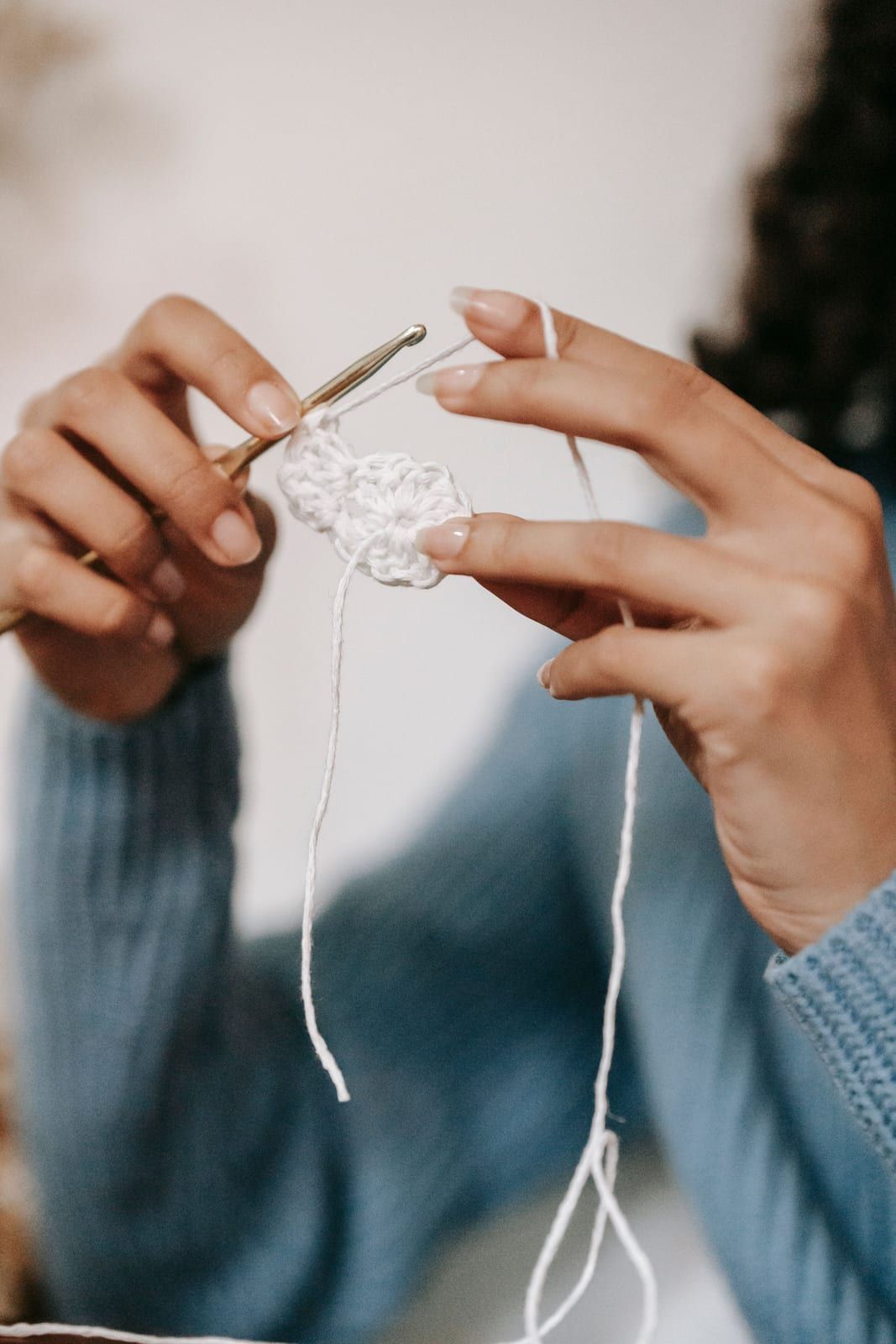
There’s no single “right” way to hold a crochet hook. There are two common grips, plenty of personal variations, and one real goal: a relaxed hand that lets the hook move smoothly while the yarn feeds evenly. This guide covers both grips, how to hold the yarn, and how to tell if your hold is working.
Parts of a crochet hook
Knowing the parts makes the grips easier to describe.
| Part | What it does |
|---|---|
| Tip (head) | Goes into stitches |
| Throat | The hooked notch that catches the yarn |
| Shaft | Sets the size of your loops — the hook size is measured here |
| Thumb rest (grip) | A flat area where your thumb sits |
| Handle | The rest of the hook, resting in your hand |
Form every loop on the shaft, not in the narrow throat. That’s what keeps stitches the size your hook is meant to make.
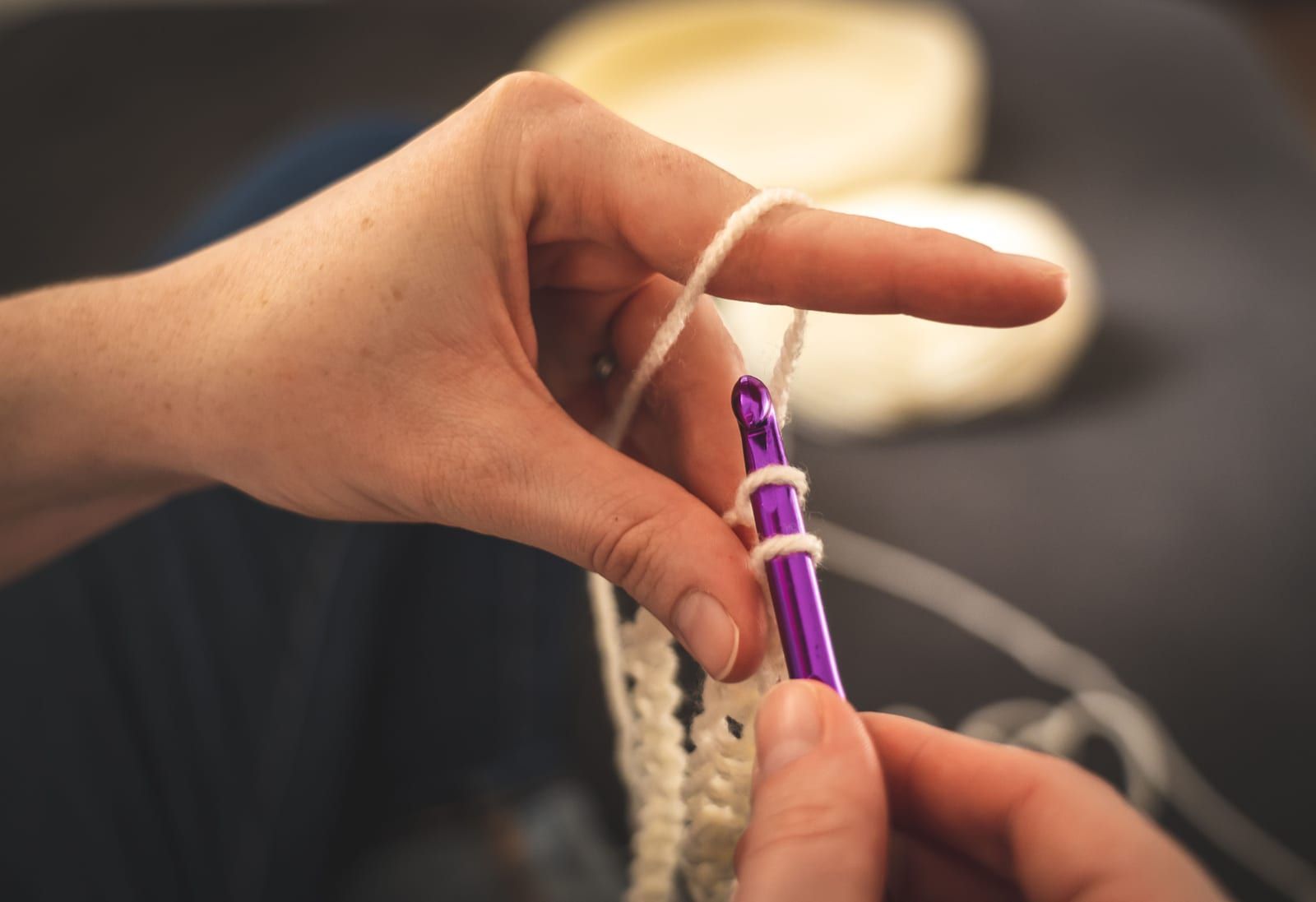
Grip 1: The pencil grip
- Pick up the hook as you would a pencil, throat facing you or slightly down.
- Place your thumb on the thumb rest and your index finger opposite it.
- Rest the hook on your middle finger, with the handle lying along the web of your hand.
- Keep the hold light, about 1–2 in (3–5 cm) behind the throat.
The pencil grip gives fine control and suits people who like small, precise wrist and finger movements.
Grip 2: The knife grip
- Hold the hook from above, like a dinner knife, with the handle under your palm.
- Place your thumb on the thumb rest and your index finger along the top of the hook.
- Wrap your remaining fingers loosely around the handle.
- Move from the wrist, rotating the hook to catch the yarn.
The knife grip feels steady and powerful, and many people find it less tiring on long projects.
Tip: Try each grip for ten minutes of chain and single crochet before deciding. The one that feels slightly less awkward is usually the one to keep.
How to hold the yarn
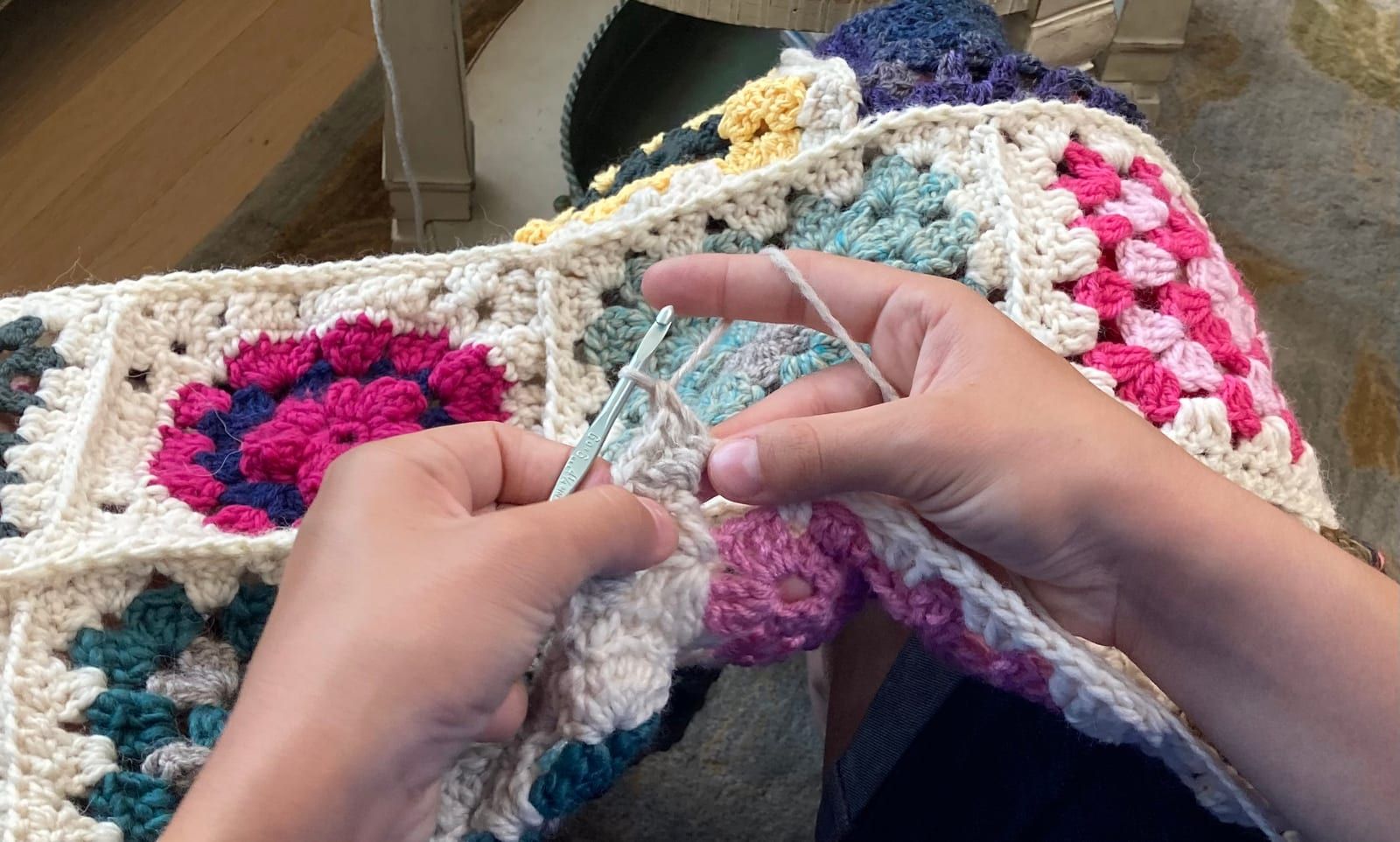
The non-hook hand (the “yarn hand”) has two jobs: controlling tension and holding the work.
- Run the working yarn — the end attached to the ball — from the back of your hand, over your index finger.
- Let it pass under your middle and ring fingers, or wrap it once around your little finger for extra tension.
- Raise your index finger slightly so the yarn forms a short, taut path to the hook.
- Pinch the work between your thumb and middle finger, just below the stitch you’re working.
- Move the pinch up every few stitches so it’s always close to the hook.
Finding your tension
| If your stitches are… | Try… |
|---|---|
| Tight, hard to insert the hook | Loosening the yarn path; skip the little-finger wrap; pull loops up to the full shaft |
| Loose and loopy | Adding a wrap around your little finger; holding the index finger higher |
| Uneven | Moving your pinch up more often; slowing down |
Tension improves with practice more than any trick. Expect it to settle after a few hours of stitching.
Left-handed crocheters
Hold the hook in your left hand and the yarn in your right. Use either grip. You’ll work from left to right, and every stitch step is identical, just mirrored. Charts and photos read as mirror images, which many left-handers handle by flipping images or using a mirror.
Avoiding sore hands
- Relax your grip. White knuckles mean you’re squeezing too hard.
- Try an ergonomic hook with a thicker, cushioned handle if your fingers ache.
- Take breaks every 20–30 minutes and stretch your fingers and wrists.
- Sit with support for your forearms, and keep your shoulders loose.
Common mistakes
- Holding the hook too close to the tip. You’ll cramp your movement and crowd loops into the throat.
- Gripping the yarn too tightly. This makes tight stitches and tired hands.
- Letting the work dangle. Without the pinch, the stitches move as you insert the hook.
- Switching grips constantly. Pick one and give it a few sessions.
FAQ
Is there a correct way to hold a crochet hook?
No. The pencil and knife grips are both widely used and both work well. Choose the one that’s comfortable and lets you make even stitches.
Which grip is better for beginners?
Neither is better. Beginners often start with the pencil grip because it feels familiar, but plenty prefer the knife grip.
Why does my hand hurt when I crochet?
Usually from gripping the hook or yarn too tightly or crocheting for long stretches without breaks. A thicker ergonomic handle can help.
Which way should the hook face?
The throat generally faces you or slightly downward. As you pull a loop through, rotate it downward so it doesn’t snag.
Step photos