- Easy
- 30 min
- US sc = UK dc
How to Crochet the Moss Stitch
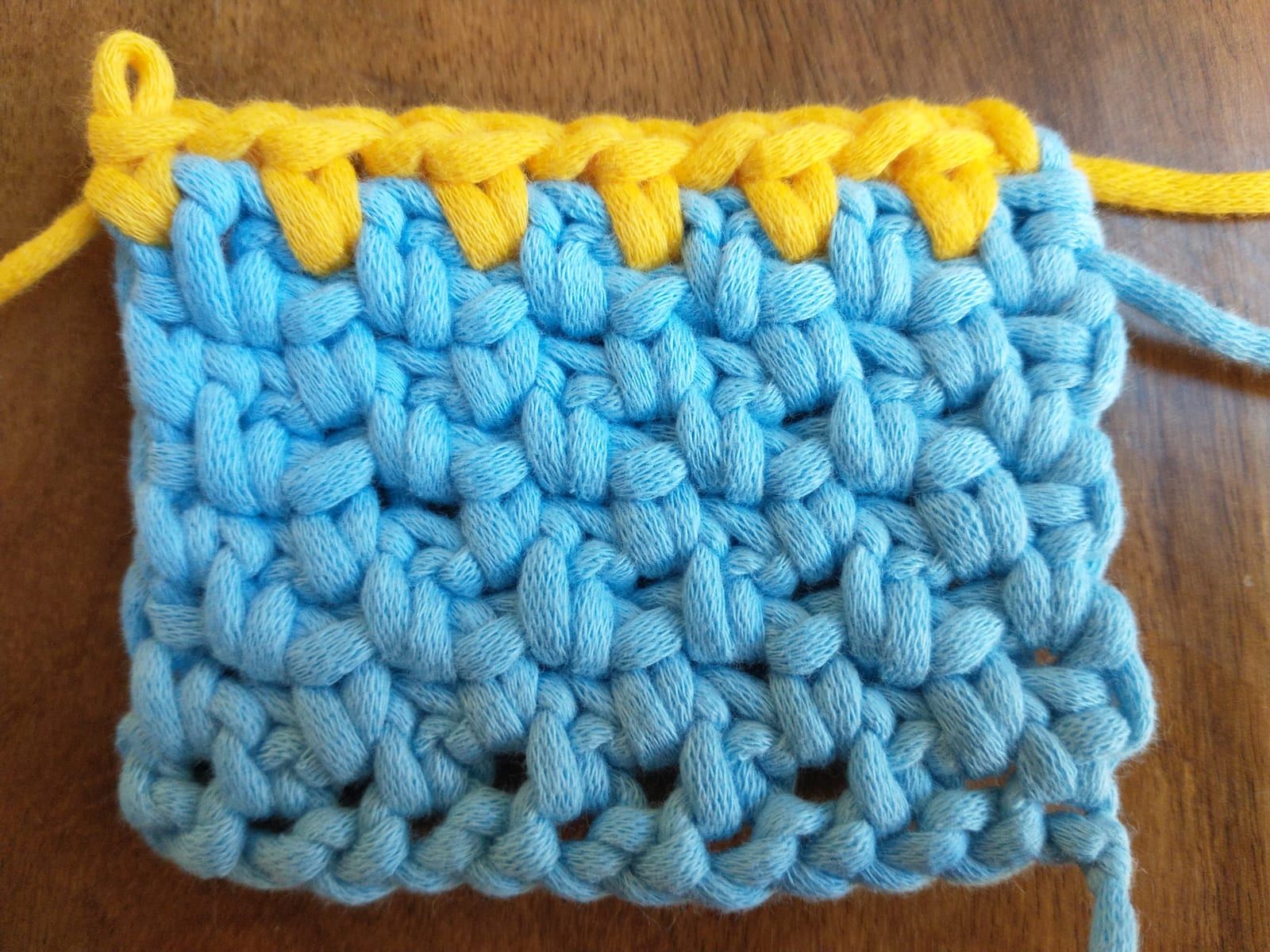

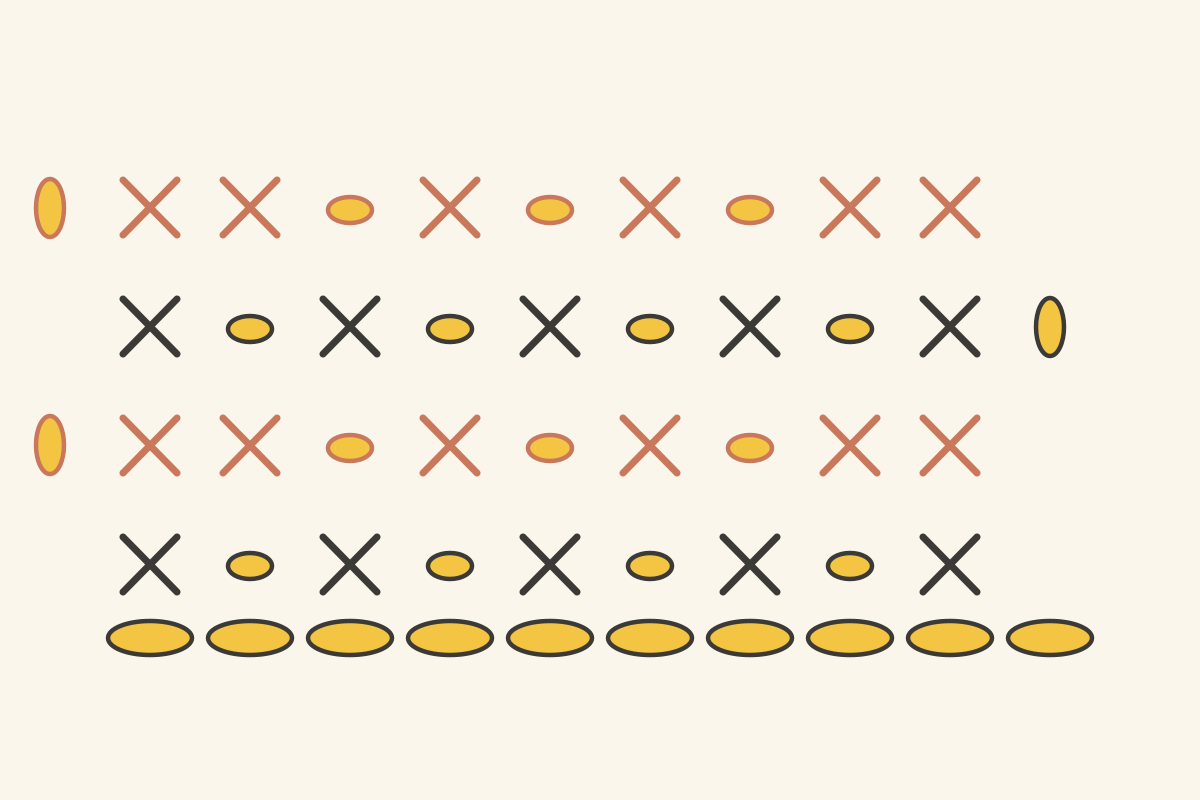
Chart key
- chain (ch)
- single crochet (sc) — UK: double crochet (dc)
Rows are read from the foundation chain up: odd rows right to left, even rows left to right.
Moss stitch is one of the most useful textures in crochet: it uses only single crochet (sc; UK double crochet) and chains, yet produces a neat, tweedy, woven-looking fabric. It’s a popular choice for stripes and variegated yarn. You’ll also see it called linen stitch, granite stitch or woven stitch.
US/UK note: this page uses US terms. US single crochet (sc) is UK double crochet (dc).
Crochet moss stitch is different from the knitting stitch with the same name. In crochet, the texture comes from working into chain spaces rather than alternating knit and purl.
You’ll need
- Worsted-weight yarn and a matching hook (5 mm / H-8 is a good start)
- Basic skills: chain, single crochet, and working into a chain space
Foundation multiple
Chain a multiple of 2 + 0 — any even number. For a practice swatch, chain 20. With the edge handling below, a foundation of N chains gives N − 1 positions (sc and ch-1 combined) in every row.
Abbreviations
- ch: chain
- sc: single crochet
- sk: skip
- ch-1 sp: the space under a chain 1 from the previous row
Step-by-step: moss stitch in rows
Row 1: Sc in 2nd ch from hook, *ch 1, sk next ch, sc in next ch; rep from * across, turn. (10 sc, 9 ch-1 sp)
Row 2: Ch 1 (does not count as a st), sc in first sc, sc in next ch-1 sp, *ch 1, sk next sc, sc in next ch-1 sp; rep from * to last sc, sc in last sc, turn. (11 sc, 8 ch-1 sp)
Row 3: Ch 1, sc in first sc, *ch 1, sk next sc, sc in next ch-1 sp; rep from * to last 2 sts, ch 1, sk next sc, sc in last sc, turn. (10 sc, 9 ch-1 sp)
Repeat Rows 2–3 until the piece is the length you want.
Every row has the same width: count each sc and each ch-1 as one stitch and you’ll have 19 positions across in every row.
Working into a chain space
- Find the chain-1 space — the small hole under the chain from the previous row.
- Insert your hook into the space itself, not into the chain stitch.
- Yarn over, pull up a loop, yarn over and pull through both loops to complete the sc.
Tip: Working into the space (rather than into the chain) is faster and makes the fabric look even. If you can’t find the spaces, hold the work up to the light — the holes show clearly.
Reading the pattern
The chart shows the logic: every sc sits above a ch-1 space, and every ch 1 sits above an sc. The only exception is at the edges: every row begins and ends with an sc worked into the edge sc of the row below. On even rows that edge sc sits right next to the first sc worked into a ch-1 space, so even rows have two sc at each end. That’s why the stitch counts alternate between rows even though the width stays the same. This is a published way of writing moss stitch, and anchoring each row end in the edge sc makes the first and last stitches easy to find, so you’re less likely to lose stitches.
Other written versions start with “sc in 4th ch from hook” and begin later rows with ch 2, working the row’s first sc into the first ch-1 space. They produce the same texture with slightly different edges and stitch counts. Use whichever version your pattern gives, and don’t mix them.
Common mistakes
- Working into the sc instead of the ch-1 space. The texture disappears and the fabric becomes plain single crochet with holes.
- Losing the edge stitches. The first and last sc of each row are easy to skip. Count your positions every few rows.
- Starting with an odd chain. With an odd number you’ll end Row 1 on a skipped chain. Rip back and chain an even number.
- Forgetting the sk. Each ch 1 replaces one stitch, so you always skip one stitch after a chain.
- Tight chains. Chain-1s that are too tight pull the fabric in and hide the woven look. Keep them the same size as your other stitches.
Variations
- Stripes: change color every 2 rows for a classic woven check.
- Moss stitch in the round: work (sc, ch 1) in each ch-1 space around and join. Because every sc lands in a space, each round offsets automatically and there are no edge stitches to manage.
- Larger hook: a hook one or two sizes up makes a looser fabric, which some crocheters prefer for scarves and wraps. Swatch first to see how your yarn behaves.
FAQ
Is moss stitch the same as linen stitch?
Yes. Crochet moss stitch, linen stitch, granite stitch and woven stitch are names for the same sc-and-ch-1 structure. Some designers use “granite” for a slightly different variation, so check the stitch instructions.
What multiple do I need for moss stitch?
Chain an even number — a multiple of 2 + 0 — when using the version on this page.
Does moss stitch curl?
That depends on your yarn, hook and tension, so check your swatch. If the edges roll, a border or light blocking often helps.
Is moss stitch good for blankets and dishcloths?
It’s a common choice for both. Every other position is a chain instead of a full stitch, so the fabric is a little more open than solid single crochet. Choose the yarn for the job, for example cotton for a dishcloth.
This page uses US crochet terms.